Month: December 2025

Eco-Friendly Pest Control Methods

Overview of Eco-Friendly Pest Control Methods

Eco-friendly pest control balances the need to eliminate pests with the desire to do the least harm to the environment, all while protecting people and pets. Catseye Pest Control understands that balance and offers innovative chemical and non-chemical treatments that safeguard households while effectively eliminating pests. 

Some of the key takeaways to consider include the following:

  • Integrated pest management offers robust solutions and long-term success.
  • Pest prevention is among the most effective strategies homeowners can undertake on their own, including the use of natural pest repellents.
  • Humane mouse traps may be effective for small infestations, but exclusion offers greater protection. 
  • DIY eco-friendly options may not be sufficient, particularly for widespread infestations, hazardous or damaging pests, or commercial properties.
  • Consulting with a professional can ensure effective elimination while still using eco-friendly, low-toxicity strategies.

Integrated Pest Management (IPM) as a Sustainable Framework

Integrated pest management (IPM) is the gold standard of eco-friendly pest control and one of Catseye’s core strategies. This prevention and maintenance-focused approach offers an effective way to get rid of pests without damaging people, pets, or the ecosystem at large. 

Our four-pronged approach begins with a thorough inspection of the home. This allows technicians to identify pest activity, how pests enter, and the conditions that may contribute to the infestation. After identifying the pest and why and how they are entering, technicians customize their treatment plans, which may include structural repairs, monitoring, and low-toxicity treatments, depending on the situation at hand. 

Most of all, IPM represents a solid framework and a partnership that allows homeowners and professionals to work together to achieve a pest-free home.

Some of the pest control measures incorporated in IPM include the following:

  • Biological control: Uses pests’ natural enemies to curtail their population
  • Cultural control: Makes the home less hospitable by removing what pests need to survive, including food, water, and shelter
  • Physical control: Removes pests and uses barriers to keep them from returning
  • Chemical control: Implements “last resort” chemical treatments when necessary, typically as part of a larger strategy to prevent infestations and achieve long-term control

Natural Pest Prevention Techniques for Residential Properties

Prevention can save money and help homeowners avoid the need for strong chemicals. One of the most effective techniques falls under the IPM umbrella: cultural control. This strategy removes the resources that pests need to survive. As a result, it’s possible to reduce the risk of attracting pests in the first place. 

A homeowner vacuums up crumbs from under their dining table as part of a regular cleaning routine, which, along with decluttering, is an important part of natural pest prevention.

The Environmental Protection Agency (EPA) provides detailed guidance on preventative measures, including removing all sources of food, water, and shelter. That means clearing clutter, which provides easy areas for pests to hide, nest, and breed. Additional steps include the following:

  • Storing food, including pet food, in rigid, tightly lidded containers, such as plastic, glass, or metal
  • Regularly removing garbage from the home and placing it in pest-proof receptacles located at least 50 feet from the exterior of the home
  • Fixing leaks promptly and remove any sources of standing water, such as clogged gutters
  • Closing any cracks, crevices, or gaps around pipes and utility intrusions
  • Covering holes and vents with wire mesh
  • Checking cardboard and grocery items before bringing them indoors to avoid inadvertently introducing pests into the home
  • Routinely vacuuming, cleaning up spills and crumbs, and washing dishes

Humane Mouse Traps and Non-Lethal Rodent Management

A 2023 study published by the National Library of Medicine shows that live traps often catch mice effectively. When studied in comparison to glue traps, live traps captured mice 75% to 91% of the time. 

Catch and release traps are a non-lethal option. They have one opening with a door that the mouse will trigger to close once it enters the trap. The mouse can then be relocated out into the wild. They typically come in one of two types: single mouse and multi-mouse traps.

Although these traps can help catch mice, they won’t help eliminate a widespread infestation. They are best for early signs of rodent activity before mice have a chance to establish their nests. If you consistently catch mice but also continue to see signs of an ongoing infestation, such as fresh droppings, it may be time to consult professionals.

Rodent and Wildlife Exclusion

One very effective rodent control measure is exclusion, which is the practice of closing off potential entry points to prevent mice and rats from entering. Wildlife exclusion systems like Cat-Guard provide a permanent, chemical-free, humane barriers. They offer targeted protection homeowners can install in one or more vulnerable areas, such as: 

  • Attics and rooflines
  • Foundations and windows
  • Low-clearance spots like decks and sheds 

Natural Insect Repellent Options and Low-Toxicity Alternatives

One popular low-toxicity, natural solution for prevention is oil of lemon eucalyptus (OLE), not to be confused with lemon eucalyptus essential oil. OLE comes from the Australian lemon-scented gum tree and contains an active ingredient known as p-menthane-3,8-diol (PMD). It’s classified as a biopesticide and has the potential to provide five to seven hours of protection that is similar to DEET. It’s generally safe for pregnant women and children ages 3 and older and helps repel biting insects like ticks and mosquitoes.

A few additional natural insect repellent options include the following:

Essential Oils

Citronella and other citrus-based essential oils can help repel mosquitoes, flies, fleas, and mites. Garlic oil repels ticks, as does thyme, which also repels fleas and mosquitoes. Lavender and cinnamon may help keep areas mosquito-free. Peppermint essential oil may also be a good weapon against ants, flies, mosquitoes, and spiders. 

Homeowners can make their own repellents by mixing 10 to 20 drops of essential oils with 2 ounces each of distilled water and distilled white vinegar. Alternatively, they can make a repellent spray using one part essential oils mixed with 10 parts witch hazel in a spray bottle. 

Vials of essential oil on a table await mixing for homeowners to make their own pest repellent sprays by diluting essential oils like lemon, eucalyptus, or peppermint in witch hazel for natural pest control.

Insect Repellent Plants

Inside or outdoors, some plants contain components that give off scents that ward off pests. Examples include:

  • Chrysanthemums: These pretty flowers contain the repellent pyrethrum and ward off cockroaches, bed bugs, ants, fleas, and ticks.
  • Rosemary: This aromatic foliage helps keep pests like snails, Japanese beetles, and carrot flies out of the garden. 
  • Basil: This herb’s scent helps keep the garden free of aphids, mites, mosquitoes, and flies. It can also prevent insects from coming indoors if planted near entryways.
  • Lemon thyme: This fragrant herb can help keep cockroaches, termites, and mosquitoes away.

When Eco-Friendly Methods Are Not Enough and Professional Support Is Required

Not all eco-friendly methods are equally effective. Natural approaches can offer effective prevention and control, particularly for small pest issues. However, commercial properties should contact professionals immediately to avoid issues with noncompliance related to health and safety regulations. 

Additionally, research suggests that 67% to 75% of homeowners who try solving pest problems on their own end up turning to pest control professionals anyway. Choosing the right treatment method, regularly repeating applications, and routine monitoring can be time-consuming, but these steps are critical for success. 

So, what is the trigger point that lets homeowners know it’s time to consult with a pro? 

  • Persistent infestations: Signs of new and ongoing pest activity that continue beyond one to two weeks suggest that current strategies are not working.
  • Widespread infestations: Professionals have the equipment and training to deal with large-scale pest infestations.
  • Presence of hazardous pests: Termites, rodents, fleas, bed bugs, and cockroaches can be some of the most difficult infestations to manage. They also pose potential risks to human health and safety and could create structural damage.

For eco-friendly pest control methods you can rely on, turn to the experts at Catseye. Our team has been using integrated pest management solutions as our go-to option for decades, and your family’s health and well-being are among our top priorities. Contact us today to learn more or to schedule an inspection.

Frequently Asked Questions

How effective is integrated pest management compared to traditional chemical treatments?

Research shows that integrated pest management is significantly more effective than traditional approaches. In one study, researchers compared traditional treatments for cockroaches to IPM. Traditional treatments had little impact, whereas IPM measures reduced cockroaches from 24.7 to 3.9 per unit, with lasting population suppression for eight months.

Another study, comparing the two strategies in apartment buildings in Brooklyn and Manhattan, New York, found that IPM did a better job of reducing cockroaches. It was also more successful in sustaining that reduction.

What indicators show that humane mouse traps are working without increasing rodent activity elsewhere in the home?

Humane mouse traps offer an effective solution for occasional sightings. Consistently catching mice in them suggests ongoing activity. One of the best indicators that the strategy is working is when you stop seeing any new droppings. Once you stop catching mice in the traps and there’s no evidence of bait disturbance, it’s a strong sign that the traps are working. If you catch no mice and see no fresh droppings, gnaw marks, or pantry intrusions for one week, you can consider it a success.

Still, humane traps rarely work for widespread infestations. If you see signs of activity extending beyond one week, contact Catseye for professional assistance.

Which natural insect repellents provide the longest-lasting protection for indoor spaces?

Some of the most effective repellents include biological controls, which use natural predators to control harmful pests. For example, having a cat in the house may not be a foolproof solution. However, the scent of a predator in the home may deter mice and other rodents from moving in.

Essential oils, such as clove, citronella, and peppermint, can also effectively repel pests, including spiders and fleas. For example, researchers found that a mix of 32% lemon eucalyptus essential oil can provide 95% protection from mosquitoes for a span of three hours.

How can homeowners confirm whether their current pest issues can be resolved using natural pest prevention alone?

As a general guideline, homeowners experiencing minor pest issues or small-scale seasonal pests can try natural remedies first. However, those who want to use natural methods for prevention must be willing to commit to the time required to apply the treatments regularly and monitor the progress regularly. Finally, homeowners sensitive to chemicals can try these solutions as their first strategy or consult with a professional about how to limit their exposure. Catseye uses low-toxicity solutions and offers guidance to homeowners to ensure safety for everyone in the home.

What environmental or health benefits make eco-friendly pest control methods preferable for families and pets?

Eco-friendly pest control provides more targeted pest control. While pesticides were once used as a blanket solution, today’s pest control landscape takes many factors into account. It matches the right treatment with the pests infesting the home, chooses the lowest-toxicity possible to effectively eliminate them, and relies on a prevention-first strategy. This approach eliminates negative impacts on the environment as well as on beneficial pests, wildlife, pets, and humans.

How do professionals determine when low-toxicity options are sufficient versus when advanced treatment is required?

Low-toxicity treatment options should be the go-to in most cases. The expert team at Catseye always begins with a thorough home inspection to assess how and why pests are getting in and to identify the pests causing problems. This allows them to develop targeted, precision treatments. However, widespread infestations, termites, and other destructive or hazardous pests may require advanced treatments. In those cases, treatments are carefully selected and applied to minimize any potential harm to people, pets, and the environment.

The post Eco-Friendly Pest Control Methods appeared first on Catseye Pest Control.

This article appeared first on Catseye Pest
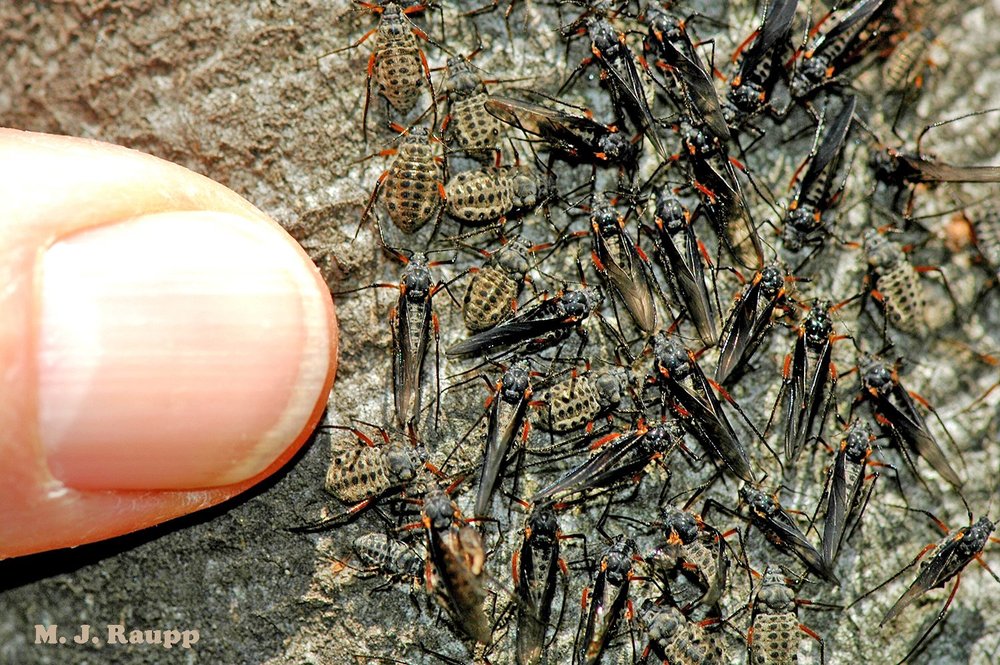
‘Twas the week before Christmas: Giant bark aphids, Longistigma caryae, and giant willow aphids, Tuberolachnus salignus

Some adult giant bark aphids have wings and others do not. These are the largest aphids in North America.

This week we dive into the Bug of the Week mailbag and turn back the clock a few years to learn about some fantastic aphids, called giant bark aphids and giant willow aphids. The giant bark aphids and attendant ants were discovered on limbs of a beautiful oak tree near the Chesapeake Bay.

On the branch of a beautiful oak tree, giant bark aphids are tended by ants. This classic mutualism, with ants protecting aphids from predators and parasites and in return receiving honeydew from aphids, is a partnership found in several countries around the world. Image credit: Catherine Carr

In addition to oaks, giant bark aphids are found on hickory, walnut, and beech, to name a few. Several years ago, on the campus of the University of Maryland, giant bark aphids and giant willow aphids were discovered on the bark of a magnificent beech tree and a weeping willow tree on campus. Here are their stories. 

Giant Bark Aphids by the Bug Guy

‘Twas the week before Christmas and what did I see,

Giant bark aphids on a leafless beech tree. 

Aphids are not known for their very large size,

But these babes on beech trees win the “big-aphid” prize. 

These serious sap-suckers spent several past weeks,

Sipping plant sap from branches through very long beaks. 

Aphid moms suck sweet phloem by night and by day,

And turn sap into nymphs – born alive, by the way. 

In this colony of giant willow aphids, the large female on the upper left portion of the branch is giving birth to a daughter.

These strange spawning efforts are quite something to see,

Bug geeks call this birth-trick viviparity. 

In the waning of fall, cold winds start to blow,

And these gals change their plan. They just seem to know. 

No more birthing youngsters on twigs in the cold,

They lay eggs on branches, many thousand all told. 

Braving icy winds and the season’s first snow, giant willow aphids try to squeeze out one more generation before Old Man Winter puts them to rest.

Tiny black eggs seem to be a perfect life stage,

To brave wicked winter when vicious storms rage. 

And if aphids can hope, their fondest hope must be,

That no predators find their eggs on the leafless beech tree. 

Fear not giant aphids, be glad and be happy,

In spring eggs will hatch when beech trees get sappy.

Eggs of the giant bark aphid are the overwintering stage. They line small branches by the thousands and change from amber to black as they age.    


Happy Holidays from Bug of the Week!


Acknowledgements 

Bug of the Week extends apologies to Clement Clark Moore. We also thank Dr. Catherine Carr for providing inspiration and an image for this episode. Like woolly alder aphids, woolly beech aphids (aka beech blight aphids), and others we met in previous episodes, these aphids reproduce parthenogenetically, that is, without males. To learn more about magnificent giant aphids on beech and willow trees, please visit the following websites:

https://content.ces.ncsu.edu/giant-bark-aphid

https://content.ces.ncsu.edu/giant-willow-aphid


To witness aphid viviparity, please click on this link: https://www.youtube.com/watch?v=Yup6spoUpv0

This post appeared first on Bug of the Week

Are Landlords Responsible for Pest Control?

Multi-family homes and rental properties have unique challenges regarding pest control. But who is responsible for pest control when renting? Explore the answers and gain insights into when the situation may require tenants to be held liable.

Overview of Landlord Responsibility for Pest Control

  • Landlords must maintain clean, safe, pest-free buildings and are often responsible for pest control. 
  • Renters may be held responsible in some circumstances, especially if they cause an infestation.
  • State and local laws often specify who is responsible for pest control and elimination. 
  • Lease agreements should clearly identify situations in which renters are liable. 

How Landlords and Pest Control Requirements Are Determined in Rentals

More than 14 million housing units experience rodent or cockroach invasions every year, according to the United States Census Bureau. Additionally, they are only two of the most common pests that invade multi-family properties. Other pests that typically top the list include spiders, ants, bed bugs, and flies. 

When one or more of these pests (or any others) begin causing problems, it’s important to determine who is responsible for eliminating them. In general, responsibility for pest control is typically defined by three main factors: state and local regulations, the source of the infestation, and specific stipulations in the lease agreement. 

First, landlords must comply with all state and local laws. Most states, including Massachusetts, New Hampshire, Connecticut, and Rhode Island, have stringent guidelines outlining landlords’ responsibilities. For example, rental properties and units should be pest-free upon the execution of the lease agreement. Additionally, landlords must maintain habitable conditions, which include providing pest control along with working plumbing, heat, and structural soundness.

However, it’s essential to note that tenants may bear some responsibility in certain situations. Stipulations in lease agreements related to the source of the infestation may shift responsibility and costs from the landlord to the tenants. 

A renter holds a dead cockroach, one of the most common pests found in multi-family homes and one that is often landlords' responsibility to control.

Factors That Decide Who Is Responsible for Pest Control When Renting

When it comes to mandatory compliance with laws and regulations, the root cause of the infestation often dictates who is responsible. Pre-existing pest infestations and those caused by structural issues fall under the responsibility of landlords. However, tenants become responsible when they engage in pest-attracting behaviors, fail to follow preventative guidance, or fail to report infestations when they notice them, which allows them to quickly spread.

 Some of the notable conditions that require landlord actions may include: 

  • Infestations that exist before tenants move in
  • Infestations caused by structural problems
  • Presence of pests that pose health hazards 
  • Pest infestations that can cause structural damage

Landlord Responsibilities and Preventative Measures 

Landlords bear significant responsibilities and must maintain safe, clean, pest-free rentals. Rental units, particularly those in multi-family properties, present unique challenges when it comes to pest management. High population density, an increased volume of garbage, shared spaces such as hallways and common areas, and shared boundaries like ceilings and walls all contribute to the spread of pests. 

This makes facility management a critical issue. Consequently, landlords should engage in practices such as the following: 

  • Monitoring: Inspections conducted by professional pest control technicians are only the beginning. Staff members, including electricians, plumbers, and maintenance personnel, should vigilantly watch for signs of pest activity. 
  • Addressing Access Points: Landlords must address issues like broken screens, cracks in the foundation, doors and windows that don’t close securely, and gaps around utility intrusions.
  • Reducing Water Sources: Landlords should address moisture issues, including leaking pipes, plumbing problems, clogged gutters and downspouts, and water-damaged wood, all of which can attract pests.
  • Maintaining Recycling and Garbage Areas: Dumpsters should be stored at least three feet away from buildings. Recycling containers should be cleaned promptly and regularly emptied of all materials. 

Tenant Obligations and Preventative Measures in Multi-Unit Housing

Tenants also have responsibilities to achieve comprehensive pest control, and these obligations should be clearly identified in the lease. Renters must practice the agreed upon preventative measures to reduce the likelihood of a pest infestation. Requirements typically include: 

  • Performing Regular Cleaning: Maintaining living spaces that are free of clutter, crumbs, and spills can make units less appealing to pests.
  • Practicing Proper Waste Disposal: Routinely removing trash and waste from the premises helps reduce the likelihood of attracting pests.
  • Flea Control: For rentals that allow pets, tenants typically must treat pets with veterinarian-approved flea prevention treatments. 
  • Promptly Reporting Activity: Early detection can help contain problems, and open communication with landlords can help ensure that issues are addressed before they turn into a larger problem.
Close-up view of a bed bug, a pest that landlords in many instances are responsible for in Connecticut, Rhode Island, Massachusetts, and New Hampshire.

When Professional Multi-Family Pest Removal Services Are Required

In some instances, tenants and landlords may be able to handle pest removal effectively without professional intervention. An occasional spider sighting, for example, or a stray ant or two could be easily remedied with consumer products. However, a professional pest inspection can ensure that a larger infestation is not missed. 

Most state and local regulations stipulate when professional pest removal is mandated:

  • Massachusetts: Landlords who don’t live in properties with up to three units and those with properties of four or more units must take action. 
  • Connecticut: Landlords who treat infestations on their own must hire a third-party inspector to confirm successful removal.
  • New Hampshire: Laws do not specify but do require landlords to maintain pest-free premises, conduct periodic inspections, and remediate pest problems.
  • Rhode Island: Landlords must consult with professionals and follow guidance accordingly. 

Landlords and Pest Control: Reasons to Avoid DIY Measures

Prevention is one of the most effective strategies for maintaining control of pests, particularly with multi-family dwellings. Shared walls, common spaces, and frequent foot traffic can encourage infestations that spread quickly. DIY strategies can be great for prevention, but when pests infest, contacting local pest experts can help control the problem before it becomes widespread. Pest control professionals can provide regular inspections, and they know precisely what to look for as they evaluate potential risks. 

Beyond that, pros can help shift the strategy from reactive to proactive. All too often, landlords follow the traditional approach and wait for a complaint and then respond. Alternatively, professional guidance can help landlords create customized prevention strategies based on key factors like local pest prevalence and pest biology.

Frequently Asked Questions

What conditions classify a pest problem as the landlord’s responsibility in a rental property?

Typically, infestations stemming from factors other than tenant behavior (i.e., failure to dispose of garbage and maintain a hygienic environment) are the landlord’s responsibility. Massachusetts, New Hampshire, Connecticut, and Rhode Island require landlords to maintain clean, safe, pest-free properties and conduct regular inspections to aid in prevention.

How can renters verify whether a lease outlines shared pest control obligations?

Renters should review their lease agreements, which should provide a clear overview of who pays for what. Leases should outline the landlord’s stipulations regarding tenant responsibilities, the landlord’s duties, and other pest-related issues like seasonal treatments and routine inspections.

What signs indicate that a pest issue is caused by building conditions rather than tenant behavior?

Some of the most obvious signs include cracks in the foundation and improperly sealed windows, doors, and openings like vents and utility intrusions. Overgrown landscaping and a failure to address moisture issues, like plumbing leaks, clogged gutters, and moisture-damaged wood, also indicate building conditions are the problem, rather than tenants’ habits.

How quickly must landlords take action once a pest infestation is reported?

It depends on state laws. Generally, landlords must inspect the rental and adjacent units or have them inspected within one to two days of being notified. In some states, such as Connecticut, landlords may have up to five days. In short, swift action can help increase the effectiveness of treatment, while delaying action may worsen the problem. With that in mind, landlords should take action as soon as possible.

What steps should tenants document when requesting pest control from a landlord?

Tenants must report pest activity promptly and provide documentation as evidence whenever possible. This may include taking videos or photos of live pests and logging where and when pests were spotted. Again, tenants should refer to their lease agreements, which may outline the precise procedures for reporting pests.

What circumstances require third-party pest professionals to evaluate a rental property?

Any evidence of pest activity should trigger a call to professionals for assessment and intervention. Professional exterminators are required when landlords do not live in or on the property, the property has fewer than three units, and landlords fail to regain control using other methods. Additionally, if infestations impact health and habitability, landlords should always reach out for expert assistance.

The Catseye team will inspect the unit and the property to get to the heart of the problem and devise the most effective treatment strategy. Catseye Pest Control has worked with both landlords and tenants for more than 30 years. Contact us today to schedule a free inspection to begin preventative measures or to eliminate an infestation.

The post Are Landlords Responsible for Pest Control? appeared first on Catseye Pest Control.

This article appeared first on Catseye Pest

A friendlier type of drone: Common Drone Fly, Eristalis tenax

Drone flies in the genus Eristalis, like the common drone fly Eristalis tanex, are striking mimics of stinging bees and wasps.

Every day, radio and television deliver fresh and not-so-fresh reports of drone attacks on alleged drug runners or unfortunate inhabitants in war-torn lands. How about we visit friendlier, kinder drones this week, dashing flies called drone flies? Drone flies are members of a remarkable family known as syrphid flies, a clan of some 800 species in North America and more than 6,000 species worldwide. Other common names for syrphids are hover flies and flower flies like those we met in previous episodes.

Ok, so why are these flies called drone flies? You may be familiar with male honey bees which are commonly  known as drones. As you can see in the image that accompanies this story, the common drone fly bears a striking resemblance to a drone honey bee, hence the name drone fly. This strong resemblance to a honey bee is thought to offer protection from predators, a type of mimicry known as Batesian mimicry. Who was Bates and what ilk of mimicry bears his name? Henry Walter Bates, a renowned British naturalist, traveled to the rainforests of the Amazon in 1848, where he noticed the uncanny similarity in color patterns of many different species of butterflies. As caterpillars, some of these butterflies consumed noxious plants, sequestered distasteful compounds, and were summarily rejected as food by potential predators. Bates observed other species of butterflies which had consumed nonpoisonous plants as larvae, that bore a striking resemblance to these noxious butterflies. By resembling distasteful species known as models, these mimics gained protection from visually hunting predators. The term Batesian mimicry describes the relationship between common distasteful or harmful models and rarer, tasty or harmless species that mimic the appearance of models to gain protection from predators. Birds attempting to eat bees learn that bees can pack a stinging wallop. By mimicking a bee, drone flies may avoid being attacked by enlightened birds or other predators.

Harmless drone flies like this one are superb mimics of stinging insects like honey bees. Predators learn not to mess with insects that might deliver a painful sting. Adult drone flies provide the important ecosystem service of pollination and frequently visit members of the aster family in flower beds and fields. They consume pollen as a protein source for egg development and nectar as an energy source. Larvae are bizarre creatures; denizens of water fouled with manure or decaying organic matter. They breathe through an elongated siphon on their rear-end that gives them the name rat-tailed maggots. Recently, while exploring a cave, I discovered small clusters of drone flies hunkered down for the winter in tiny pockets lining the roof of the cavern. With the return of spring, these pretty flies will emerge to pollinate flowers in our gardens and landscapes. Video credit: Michael Raupp and Donald Hobern for the image of the rat-tailed maggot recorded for this episode. This image was originally posted to Flickr by dhobern at https://flickr.com/photos/25401497@N02/25588804434. It was reviewed on 11 April 2016 by FlickreviewR and was confirmed to be licensed under the terms of the cc-by-2.0.

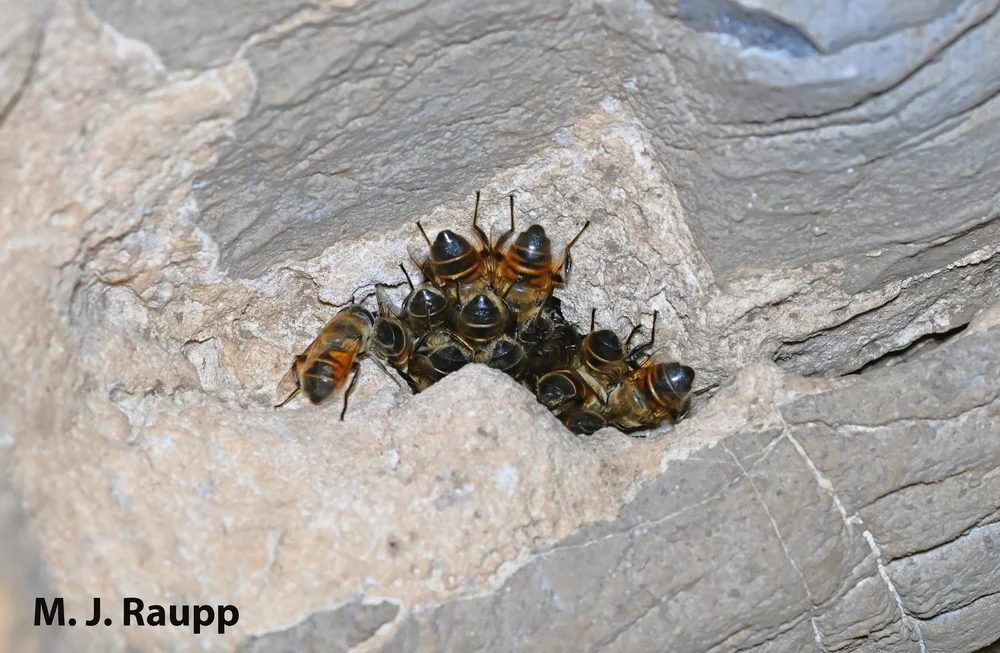
To survive the wicked winter, drone flies seek shelter and huddle in small nooks inside caves.

While spelunking in a cave last month in search of camel crickets, we happened across clusters of winged insects snuggled down for a long-winter’s nap in tiny rocky pockets on the roof of the cavern. At first glance they appeared to be bees, but on closer inspection a single pair of wings rather than two pairs proved them to be flies rather than bees. Bees have four wings and flies have two. A visit to iNaturalist confirmed these hibernal troglodytes to be drone flies. The drone fly featured this week, Eristalis tenax, is known as the common drone fly by virtue of its cosmopolitan distribution. This native of Europe is found not only in the US but in every continent except Antarctica. Unlike syrphid larvae we met in previous episodes, fierce predators providing the ecosystem service of biological control, larvae of Eristalis tenax perform a different service. They repurpose and recycle organic waste. In graduate school, my first encounter with drone fly larvae was at a large manure lagoon near the animal barns on our campus. Wriggling in these murky waters were strange larvae with exceedingly long tails on their rear end. Drone fly larvae are called rat-tailed maggots for obvious reasons. The super long appendage on their butt is a siphon used to obtain oxygen from and discharge carbon dioxide into the air above aquatic or semi-aquatic habitats such as fouled drainage ditches or manure lagoons in which rat-tailed maggots thrive.

Larval drone flies called rat-tailed maggots thrive in water fouled with manure. In these aquatic habitats they exchange oxygen and carbon dioxide with the atmosphere through an elongated siphon on their rear end. Donald Hobern. This image was originally posted to Flickr by dhobern at https://flickr.com/photos/25401497@N02/25588804434. It was reviewed on 11 April 2016 by FlickreviewR and was confirmed to be licensed under the terms of the cc-by-2.0.

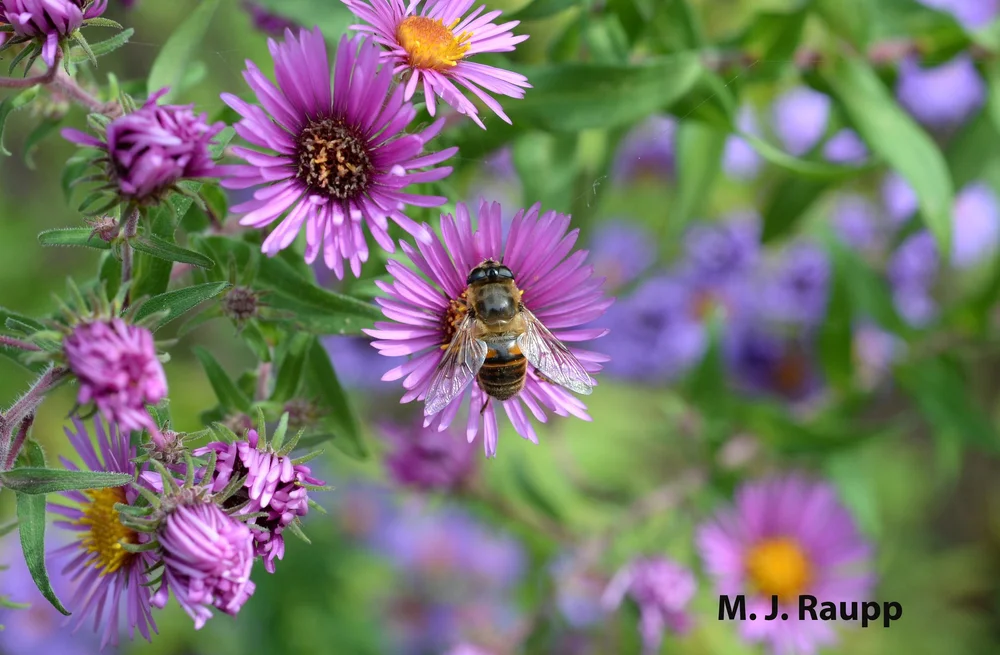
Adult drone flies are important pollinators. They obtain pollen as a protein source for egg development and nectar as an energy source to fly and find suitable rank locations for egg deposition. Adults visit many types of flowering plants but show a particular affinity for many members of the aster family like daisies, zinnias, and of course, asters.

Pollination of many kinds of flowering plants is an important ecosystem service provided by several species of drone flies. Members of the aster family are some of their favorites.

While pollinating flowers and recycling animal waste are two positive attributes of drone flies, there are a few downsides to these fascinating flies. When droves of maggots leave their stinky manure lagoons to pupate, they sometimes contaminate food for livestock or wriggle into electrical boxes where they short-circuit electrical connections and cause power outages. The penchant for drone flies to lay eggs on decaying organic matter may cause improperly handled food or drink to become contaminated with eggs of tiny maggots. If ingested, they can survive in the digestive tract of animals, causing an illness called myiasis. Human myiasis associated with drone fly larvae occurs where sanitation is poor. Myiasis can cause stomach cramps, diarrhea, and an unsettling discovery of rat-tailed larvae in stool. Now that’s a nasty surprise. If you have a chance, visit a cave during this wintery season and perhaps you can spot some of these remarkable mimics as they chill-out for winter. Better yet, next spring plant some zinnias or asters and your chances of enjoying these remarkable mimics are almost guaranteed.  

Acknowledgements             

We thank Eliose and Abigail whose fondness for caverns provided the inspiration for this episode. Thanks also to Donald Hobern from Copenhagen, Denmark for the use of his image of a rat-tailed maggot larva: Eristalis sp., larva, Søborg, Denmark, 2 April 2016. The fact-packed article “ Drone Fly, Rat-Tailed Maggot Eristalis tenax (Linnaeus) (Insecta: Diptera: Syrphidae)” by Margaret Pfiester and Phillip E. Kaufman was a primary reference used for this article.

This post appeared first on Bug of the Week

Winter 2026 Pest Forecast

The Winter 2026 pest forecast looks like an above-average year in terms of activity. Warmer winter weather and rapidly changing conditions will likely increase pressure in terms of rodents and infestations of insects like lady beetles, spiders, stink bugs, and cluster flies.

Summary of Key Winter 2026 Pest Predictions 

  • La Nina, a shifting jet stream, and the influence of the Polar Vortex are combining to create a volatile 2026 winter season. 
  • Massachusetts, Rhode Island, Connecticut, and New Hampshire will likely experience warmer-than-normal weather with sharp temperature drops and unpredictable storms.
  • Expect increased indoor pressure from rodents and insects such as stink bugs, cluster flies, and spiders throughout winter. 
  • Pests like ticks may emerge during warmer winter weather and pose an even greater threat in spring.
  • Sealing high-risk home zones and addressing structural vulnerabilities can prevent many pests from moving indoors. 
  • When you see signs of pests during winter 2026, call for professional pest control as soon as possible to control the situation.

Temperature Outlook & Seasonal Pest Pressure Indicators 

The last few winters have been cold but relatively dry for the region. During this time, below average snowfalls left much of Massachusetts, Rhode Island, Connecticut, and New Hampshire in a bit of a snow drought.

However, the National Oceanic and Atmospheric Association (NOAA) predicts the 2025-2026 winter weather in the region will be influenced by La Nina. This weather pattern takes place in the Pacific Ocean and is characterized by gusty winds that push warm water west from South America to Indonesia. At the same time, cold water rises from deep below the ocean’s surface, making the ocean water near the equator colder than normal. That impacts weather in a number of regions, including North America. 

Additionally, La Nina alters the jet stream that crosses the United States. As a result, much of New England will be left sandwiched between milder weather in the Southeast and colder conditions inland.

Although many meteorologists are unsure of exactly what to expect, most anticipate a highly volatile 2025-2026 season. It’s possible the region will experience sharp dips in temperatures when the Polar Vortex moves southward, punctuated by periods of unseasonably mild temperatures. Unpredictable storms could bring significant moisture, although the snowfall will likely be below average amounts.

A snowy scene on Charles Street in Boston, which may happen again during the volatile winter ahead, sending pests like rodents scurrying indoors and increasing pressure on homeowners and businesses.

What This Could Mean for Pests Coming in Winter 2026 

Temperature anomalies and volatile weather combine for an unpredictable season ahead, as both can disrupt pest patterns. Common winter pest issues may shift because warmer winters can lead to early awakenings of hibernating pests like stink bugs and lady beetles, extending pests’ active seasons longer than normal.

The first freeze usually starts slowing pest activity, but delays in the first freeze and warmer winters can have a significant impact on that reduction. Populations of ants, mosquitoes, and ticks may thrive longer than normal in certain conditions. These pests may also emerge periodically during warmer winter weather. The result is that people and pets may be at risk of pest encounters and potential disease transmission for longer periods than anticipated.

Rodent Activity Forecast for Winter 2026 

Rodent season is already underway in late 2025. Mice and rats typically begin moving indoors in fall when the temperatures begin to drop.

However, projected winter temperatures can impact the usual nesting patterns. Warmer winters and milder autumn weather lead to extended periods of activity and prolonged breeding seasons. As a result, a growing rodent population could mean increased indoor pressure as these critters begin seeking shelter at later than usual times. Warmer winter weather, combined with volatile shifts in temperatures and snow, may also cause rodents to continue to be a challenge well into the spring. 

Increased Indoor Pressure 

Rodents naturally seek warmth and safety during cold weather, which means garages, attics, and wall voids are fair game — nothing is off limits. Mice and rats instinctively look for insulated areas with easy access, and they will use every resource nearby to create a cozy nest to spend the season. Newspapers, cardboard, and insulation make excellent nesting materials.

Movement Timing 

A warmer fall and mild start to winter may delay rodents’ typical timeline. Here in the Northeast, “rodent season” usually starts in August or September and peaks from November through February. The fluctuations from mild to frigid and dry to snowy may well have homeowners seeing an increase in activity. Rodents may return outdoors during warm spells and scurry back inside when the cold sets in again, making effective rodent control critical.

Overwintering Insect Outlook (Stink Bugs, Cluster Flies, Spiders) 

The National Pest Management Association released its latest Bug Barometer. NPMA releases this data-backed report twice a year. It takes long-term forecasts, weather patterns, and general pest biology into account. Their findings indicate a strong potential for a significant uptick in not only rodents, but also spiders, stink bugs, ants, flies, and ticks. Homeowners can expect increased pressure, but preventative steps and effective pest control can help them maintain pest-free winter homes.

Expected Patterns 

When temperatures dip below 50 degrees Fahrenheit, many insects enter a slowdown period and begin seeking shelter. Some pests may burrow underground or seek shelter in leaf piles, logs, and other protected outdoor areas. Those that seek out indoor spaces typically look for dark, out-of-the-way areas like spaces behind walls and suspended ceilings, crawlspaces, and attics.

Regional Severity 

The severity of insect inundation will vary, depending on how weather patterns actually play out. During warm snaps and unseasonably mild weather, as is anticipated for parts of winter 2026, these insects may emerge. Cluster flies may gather near windows, stink bugs may begin moving around, and spiders, ants, and other overwintering insects may move around more frequently. Outside, watch out for various insects during warmer winter weather. Ticks pose a particular risk because they become active in temperatures as low as 40 degrees Fahrenheit and pose a significant health risk by transmitting diseases.

High-Risk Home Zones & Structural Vulnerabilities in 2026 

Many pests target the core elements of the home — its foundation, roofline, utility penetrations, exterior walls, doors, and windows. Other interior spaces that are also high-risk zones include moisture-prone areas like bathrooms, kitchens, basements, and crawl spaces. By understanding the areas of high risk and vulnerability, it’s possible to keep a more watchful eye out for spotting potential problems.

High Risk Interior Areas 

Some of the most common areas that pests invade include attics and wall voids. The pantry, kitchen, and dining area are significantly attractive zones for many pests. Food, crumbs, and spills offer a buffet for rodents and insects searching for a snack. Bathrooms, crawl spaces, and basements offer a combination of humidity and warmth in many cases. Leaky pipes in bathrooms and kitchens are also extremely appealing to many types of pests. 

A homeowner seals around windows while professionals seal cracks in the foundation and install exclusion systems as part of their strategy to prepare for pest prevention in the winter of 2026.

High Risk Exterior Areas 

The foundation and the roof can offer easy access to curious critters. All it takes is an opening as narrow as a dime for a mouse to squeeze inside, and insects require even less room. Chimneys, soffits, vents, damaged siding, and improperly sealed doors and windows serve as open invitations for pests to invade before you even realize it. Structural vulnerabilities to watch include cracks and gaps in the foundation, holes around utility penetrations, and damage to the roofline.

Preventative Recommendations for Homeowners 

  • Inspect the exterior of the home, paying close attention to windows, doors, foundations, and the roof.
  • Seal any potential entry points.
  • Inspect the chimney, vents, and soffits.
  • Perform repairs to screening or add screening to prevent pests from entering. 
  • Inspect firewood piles regularly and store wood a minimum of 20 feet from the home.
  • Maintain a low-clutter home, keeping food sealed in airtight containers and routinely cleaning any food debris or spills.
  • Keep any yard debris away from the home. 
  • Eliminate standing water both indoors and out. 
  • Remain aware of potential triggers and problem zones. 
  • Contact Catseye Pest Control for professional support when needed. 

When to Seek Professional Support During Winter 2026 

Don’t wait until you see clusters of insects or live rodents before calling for help. The forecast suggests the potential for increased pest activity throughout the Northeast, which means insects and rodents are likely to move indoors early and remain active longer.

From late fall until the first freeze, anticipate that rodents will be actively looking for shelter. Because this winter will likely begin mildly, insects’ and rodents’ movements may be harder to predict and continue well into the season. Remain particularly vigilant during warm periods and after abrupt changes in weather patterns.

Action Thresholds 

Any sighting of potentially dangerous pests, particularly in bedrooms or living rooms, is cause for seeking professional assistance. Cockroaches alone can carry more than 30 pathogens and contaminate food and surfaces with the germs that cause E. coli, salmonella, and dysentery. If you see consistent signs of pest activity, notice damage to insulation or structural elements, or see insects or rodents, you should immediately call for professional assistance. 

Frequently Asked Questions

What environmental indicators suggest a higher-than-average rodent surge for winter 2026?

Mild winters have been creating increasing rodent populations for the last few years. Winter 2026 is shaping up to be a weak La Nina year, bringing a mixture of milder than normal temperatures and below average snowfall punctuated by periods of cold weather influenced by the Polar Vortex. The warmer fall and delayed onset of winter may prolong the breeding season for pests and increase the rodent population.

How will projected warm–cold temperature swings influence overwintering pest emergence cycles?

Many pests are sensitive to temperature differences. Ticks, for example, typically become inactive in temperatures below freezing. When a warm spell hits, however, they can emerge and pose a threat to both pets and people who may be unaware they are active. Temperature swings may also lead to an earlier emergence of many pests in spring and impact breeding cycles, causing a population surge.

Which structural weaknesses are most likely to contribute to winter 2026 indoor pest infiltration?

Gaps around utility lines that run from indoors to outside; cracks and holes in walls, siding, and foundations; and openings in rooflines are among the chief concerns. Uncapped chimneys can provide a perfect opening for pests, while ice dams can create the kind of damage that gives pests easy access to homes.

What weather threshold typically triggers a rapid shift from outdoor to indoor pest activity in winter climates?

Abrupt temperature shifts, consistently cool days, and moisture levels can all send pests rapidly moving indoors. For example, damp, rainy weather often boosts the activity of moisture-loving pests like cockroaches and termites. Snow and extreme cold will send rodents and some nuisance wildlife in search of shelter and warmth.

How can homeowners determine whether early-season pest sightings indicate a developing winter 2026 infestation?

With many pests, including rodents, once you begin seeing signs, you already have a burgeoning problem. Droppings, greasy-looking trails, gnaw marks, nesting materials, and unusual noises and smells can indicate the presence of pests, even before you see a live insect, rodent, or wildlife.

What regions in the Northeast are expected to experience the highest overwintering insect pressure based on the 2026 forecast?

Every region across the country is expecting increased pressure of some kind. In the Northeast, particularly Massachusetts, Connecticut, New Hampshire, and Rhode Island, expectations include extended ant and mosquito activity, fluctuating levels of stink bugs, box elder bugs, and lady beetles. Ticks will flourish during warm winter weather and pose an even larger problem in spring, while rodent activity will continue to challenge homes and businesses.

The post Winter 2026 Pest Forecast appeared first on Catseye Pest Control.

This article appeared first on Catseye Pest

Reliable Pest Control in New Hampshire 

Choosing a pest control company in New Hampshire isn’t just about removing pests — it’s about protecting your home, business, and peace of mind. With changing seasons, dense forests, and a mix of rural and urban environments, NH faces unique challenges from insects, rodents, and nuisance wildlife year-round. That’s why finding reliable pest control in New Hampshire is essential. 

Catseye Pest Control has earned its reputation as a top pest control company in NH by combining decades of experience with proven, environmentally responsible treatments. Our licensed technicians use advanced inspection methods, preventative strategies, and safe, targeted solutions designed for New Hampshire’s climate and pest activity. 

If you’re looking for trusted exterminators, premier pest control services, and long-term protection, Catseye provides the expertise, transparency, and customer care NH residents rely on. Below, explore what sets our services apart and why homeowners and businesses across the state choose Catseye for their pest control needs. 

Why Choose Catseye Pest Control Throughout New England 

Catseye relies on science-based, innovative treatments that feature eco-friendly, pet-safe options that are gentle on people, pets, and the environment but effective for eliminating pests. We offer a full menu of services for both residential and commercial clients and provide award-winning services you can trust.

We were awarded the Quality Pro Certification for Excellence in pest management practices and standards. This gold standard ranking in the industry provides confidence that our team adheres to the most stringent practices. Additionally, this ranking is only granted to a select number of companies at the forefront of pest control. Why do New Hampshire residents and business owners choose Catseye?

  • Award winning service 
  • Local expertise
  • Eco-friendly and pet-safe pest control services 
  • Comprehensive protection plans for residential and commercial properties 

Comprehensive Pest Control Services in New Hampshire 

New Hampshire is a wonderful place to live and work. Thankfully, Catseye offers a full roster of pest control services, including insect, rodent, and wildlife management, to keep it that way. 

Residential Pest Control 

New Hampshire has more than 650,000 homes, and Catseye’s comprehensive menu of residential pest control services helps ensure that those homes remain free of harmful and potentially dangerous insects, rodents, and wildlife. Our team of licensed technicians understand the trust necessary to bring professionals into your home. We pledge to work with you to keep your property and family safe and pest-free.

Commercial Pest Control 

New Hampshire’s business landscape is thriving, and the state is a hub for advanced manufacturing, life sciences, and technology companies. Hospitality, healthcare, and other industries are also adding to the state’s reputation as a center of innovation.

A healthy business of any size must maintain a pest-free environment. That’s the key to remaining compliant with health codes, protecting employees and customers, and safeguarding the brand’s reputation. Catseye’s commercial services are designed to ensure every NH business meets and exceeds all expectations.

Wildlife Removal and Exclusion 

As the second most forested state in the country, New Hampshire features a rugged wilderness that many pests call home. Wildlife, including bats, skunks, raccoons, and beavers, often make their way out of the woods and into populated areas. Catseye’s team is up to date on all regulations that protect wildlife and stipulate how different species, including bats, can be removed.

In addition to residential and commercial wildlife removal, we offer exclusion services, including Cat-Guard. This innovative system provides targeted protection and a permanent, chemical-free barrier to keep pests out for good.

Year-Round Protection Programs 

For routine inspections and the ultimate peace of mind for your New Hampshire home or business, consider enrolling in a pest control preventative treatment treatment plan. Platinum Home Protection, our residential plan, offers the best control and features routine inspections, regular preventative treatments, and a service guarantee.

A wet beaver with brown fur is biting and holding green leafy branches with its front paws, surrounded by tall grass and foliage.

Common Pest Issues in New Hampshire 

Seasonal challenges from boxelder bugs, brown marmorated stinkbugs, and multi-colored Asian lady bugs are on the rise in the Granite State. Additionally, homes and businesses grapple with year-round threats from bed bugs, cockroaches, spiders, mice, and rats. 

Seasonal Pests 

New Hampshire’s seasons are spectacular. From skiing Loon Mountain in winter to taking in the fall foliage or enjoying warmer weather with activities like hiking in White Mountain National Forest or on the Appalachian Trail, there is always something to see and do.

However, each season also brings its own pest challenges. A few examples include: 

  • Termites: Silent and nearly undetectable during most of the year, termites swarm at certain times of the year, and it’s essential to recognize the signs of these destructive pests. From March through May, watch for winged insects with dark bodies and double sets of wings near windows and light sources. Termites may also swarm during winter in heated buildings.
  • Ants: Summer is prime time for all ants, with carpenter ants among the most destructive species. As they tunnel into wood to make their nests, these ants weaken structural elements and wreak havoc on homes, businesses, fences, and outbuildings.
  • Rodents: Rodent populations have been increasing across the state. Some of the most common include house mice, Norway rats, voles, squirrels, American beavers, and porcupines. Rodent activity can occur year-round but tends to spike in the fall and winter when critters look for warm spots to spend the cold weather months.
  • Mosquitoes: Wet weather, dense forests, and warming temperatures are a perfect equation for booming mosquito populations. Mosquito season typically runs from May or June through September or October. 
  • Ticks: Warming winters increase tick populations and extend “tick season.” Ticks can be active year-round but typically spike from April through November.

Regional Concerns 

As one of the more mountainous states in the region, New Hampshire typically experiences shorter springs and summers and longer, snowier winters. Still, climate change has produced warmer winters that contribute to rising tick populations in the state.

Also of note, skiing and other winter activities, along with boating, hiking, and warm weather attractions, attract more than 4 million visitors to the state yearly. In addition to hotels and restaurants, the region is home to many vacation properties. These homes can be vacant for stretches at a time, reinforcing the need for top-tier pest management to proactively protect guests and the property’s reputation.

Aerial view of a historic red brick building with a green steeple and arched windows, surrounded by trees and other buildings in a small town on a partly cloudy day.

Serving Communities Throughout New Hampshire 

Whether you are a homeowner or a business, when you need professional pest control, you want to work with pros who have local expertise. The Catseye team has provided exceptional services throughout New Hampshire for decades. We are conveniently located in Nashua, and we serve locations throughout the region, addressing each area’s unique concerns.

  • Nashua: Urban density creates a heat island effect that increases insect breeding cycles. Atmospheric moisture from the Gate City’s proximity to the Merrimack and Nashua Rivers increases the likelihood of moisture-prone pests like rodents, termites, and cockroaches. 
  • Concord: Historic buildings and homes in the capital city are prone to termites, beetles, silverfish, and cockroaches.
  • Manchester: Popular with visitors and home to eight colleges and universities and a vibrant arts and culture scene, the Queen City is vulnerable to bed bugs, carpenter ants, mice, and wasps. 

Expert Exterminators in New Hampshire 

Safety, effectiveness, and proven solutions are among the biggest benefits that come with working with professionals. Local pest control experts understand everything that makes your property unique, including the seasonal and regional concerns and local surges in pest populations.

Additionally, trying to deal with infestations on your own may worsen the situation and even put you and others at risk. Explore a few reasons why New Hampshire homes and businesses turn to Catseye for award-winning, customer-trusted, premier pest control. 

The Hidden Problem: DIY Fixes Offer Short-term Solutions 

Although it can be tempting to try do-it-yourself fixes like sprays and traps, these short-term solutions rarely attack the root of the problem. Worse, you’re only dealing with what is visible. With many pests, the truth is that they nest in out of the way spots like wall voids — in other words, areas you can’t see. So, even if you catch a few pests, there may be a multitude hidden away. 

The Catseye Solution: Technicians begin every call with a thorough inspection, inside and out, to identify what pests are infesting the property. The results also reveal where they are nesting, along with how and why they are getting inside your home or business.

Challenges with Chemical Solutions 

Three common issues arise with DIY chemical use. First, you may buy a product that contains the chemicals to eliminate the pest you’re dealing with, but the dosage may not offer maximum effectiveness. In short, the product may not be powerful enough to take care of the problem. Furthermore, using DIY pest control can leave you and others vulnerable to inadvertent chemical exposure. 

The Catseye Solution: The Catseye team prioritizes protecting your family, pets, and property while effectively eliminating pests using safe, science-based solutions. Technicians are highly trained and have all the necessary equipment to ensure safe applications of targeted pest treatments. 

Failure to Prevent Future Problems 

Proactively managing pests is more effective than reacting to infestations. DIY solutions rarely address how and why pests are entering the premises, leaving your home or business vulnerable to recurrences.

The Catseye Solution: Our team follows an integrated pest management (IPM) approach that focuses on prevention first and responsible, low-toxicity treatments as needed. We partner with you to keep pests out for good, offering long-term pest management and peace of mind.

Contact the Top Pest Control Company in NH 

For Greater NH pest control, turn to the award-winning team at Catseye. We rely on safe, proven strategies for long-term control and minimal impact on the environment. Low-toxicity solutions keep people and pets safer, and our commitment to superior customer service ensures you stay in the loop at every stage.

Our team of licensed professionals have earned Catseye an A+ Better Business Bureau rating and excellent customer reviews. For quality, value, and service you can trust, contact the premier pest control in NH today.

Frequently Asked Questions

What makes Catseye Pest Control a trusted choice in New Hampshire?

New Hampshire homeowners and businesses trust the Catseye Difference. We have served the Greater New Hampshire area for more than three decades. Our team has won numerous awards, including the prestigious Quality Pro Certification for excellence in pest management practices and standards. Our safe, comprehensive approach to pest control, glowing customer reviews, A+ Better Business Bureau rating, and commitment to providing great service make Catseye a standout.

Does Catseye offer both home and business pest control services?

Yes, Catseye offers comprehensive services for residential and commercial properties, including insect, rodent, and nuisance wildlife control. We also have year-round protection plans for both homes and businesses.

What pests are most common in New Hampshire?

Common New Hampshire pests include insects like bed bugs, wasps, carpenter ants, mosquitoes, and ticks. Other common pests include rodents like house mice, squirrels, Norway rats, and American beavers as well as porcupines and wildlife like raccoons, bats, and skunks.

Are your pest control products safe for kids and pets?

Yes, Catseye’s pest control treatments are safe for your family and the environment while offering effective control of insects and other pests. Our technicians and dedicated customer service representatives can discuss any concerns you have regarding the specific treatments you receive. Your health and safety are among our top concerns.

How quickly can a pest control treatment be scheduled in New Hampshire?

You can schedule a pest control treatment with Catseye as soon as today. Our team understands how important it is to move quickly, and we will do everything possible to schedule services for you ASAP.

The post Reliable Pest Control in New Hampshire  appeared first on Catseye Pest Control.

This article appeared first on Catseye Pest

When feather-leg flies meet leaffooted bugs: Trichopoda pennipes and Acanthocephala spp.

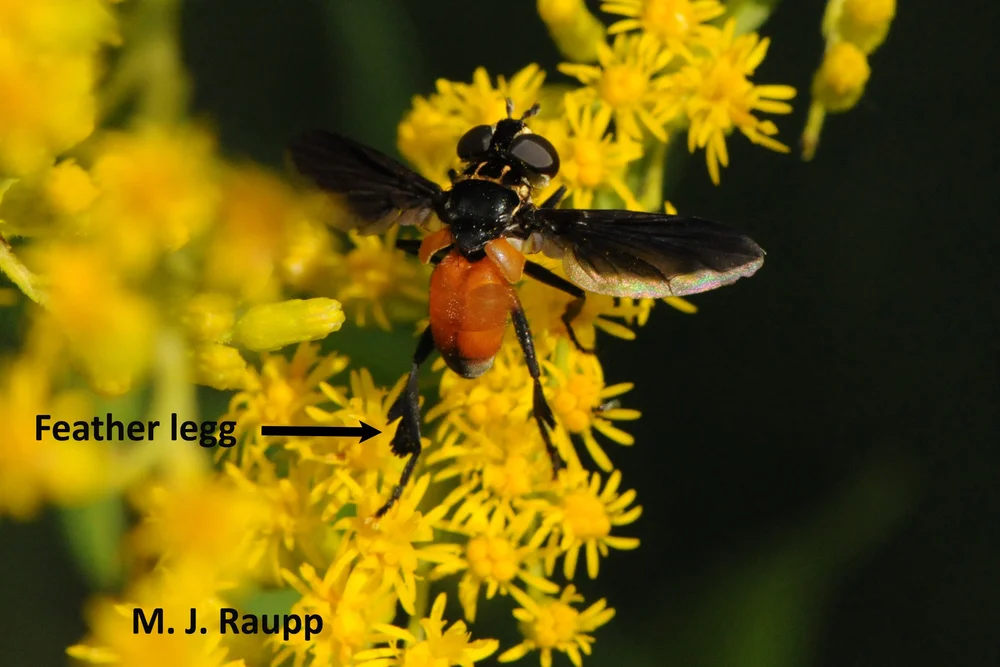
Feather-leg flies, common visitors to goldenrods, tank-up on carbohydrates to power their search for members of the true bug clan that serve as hosts for their developing larvae.

Three weeks ago, we visited leaffooted bugs that dropped a leg to save their life. At the end of the video clip, we met a five-legged survivor of an apparent attack bedecked with two small white blobs attached to its back. We promised to revisit this bug to learn the story of the strange ornaments on its back. Here’s the deal. The white blobs on the back of the leaffooted bug are eggs deposited by a pretty parasitic fly known as a feather-legged fly. Feather-legged flies belong to a clan of parasitic flies called tachinids. Some tachinids attack caterpillars, including the nefarious gypsy moth caterpillar, but feather-legged flies have a penchant for attacking members of the “true bug” clan, insects with sucking mouthparts and immature stages called nymphs. Female flies tangle with their true bug victims and attach eggs to the exoskeleton of the host often in places where it is difficult for the host to remove them. Eggs hatch and fly larvae bore into the host to develop. When their development is complete, they exit, drop to the ground and pupate in the soil. Adults emerge from the soil to feed, mate, and find new bugs to attack and parasitize.

Three weeks ago we visited a leaffooted bug that dropped a leg to save its life. At the end of the video clip, we noticed two small white blobs attached to its back. The blobs are eggs deposited by a pretty parasitic tachinid fly known as a feather-legged fly. The eggs hatch and the fly larvae bore into the host to develop as they dine on their host. When their development is complete, the larvae exit, drop to the ground and pupate in the soil. Adults emerge from the soil to feed, mate, and find new bugs to attack and parasitize. Pretty feather-legged flies are common visitors to goldenrods in late summer and autumn. In addition to attacking native insects, feather-legged flies put a beat down on invasive pests like nefarious brown marmorated stink bugs.

But how do these smallish flies find their hosts in a very big world? Insects communicate in a variety of ways using sight, sound, and volatile chemicals to find and join other members of their species. Chemicals used for communication by members of the same species are called pheromones. In a series of fascinating studies, Jeff Aldrich and his colleagues discovered how these parasitic flies locate their victims. Many species of true bugs produce pheromones that serve as assembly calls for purposes of mating and defense. Tachinids use aggregation pheromones of true bugs for their own mischievous purpose, to find hosts that will serve as food for their parasitic offspring. While this tale may seem a little dark, the good news here is that native Trichopoda flies have joined other allies, including wheel bugs, garden spiders, robber flies, mantises, and wasps to stymie the shenanigans of invasive pests including the brown marmorated stink bug.     

Two white eggs deposited just behind the head of this leaffooted bug are the handiwork of a tachinid fly. They spell doom for this hapless hemipteran.

Acknowledgements

The intriguing references “The biology of Trichopoda pennipes Fab. (Diptera, Tachinidae), a parasite of the common squash bug by Harlan Worthley, “Bug pheromones (Hemiptera, Heteroptera) and tachinid fly host-finding” by Jeff Aldrich, Ashot Khrimian, Aijun Zhang, and Peter Sherer, and “Parasitism of the Invasive Brown Marmorated Stink Bug, Halyomorpha halys (Hemiptera: Pentatomidae), by the Native Parasitoid, Trichopoda pennipes (Diptera: Tachinidae)” by Neelendra K. Joshi, Timothy W. Leslie, and David J. Biddinger were used to prepare this episode.

This post appeared first on Bug of the Week

(877) 959-3534