A friendlier type of drone: Common Drone Fly, Eristalis tenax

Drone flies in the genus Eristalis, like the common drone fly Eristalis tanex, are striking mimics of stinging bees and wasps.
Every day, radio and television deliver fresh and not-so-fresh reports of drone attacks on alleged drug runners or unfortunate inhabitants in war-torn lands. How about we visit friendlier, kinder drones this week, dashing flies called drone flies? Drone flies are members of a remarkable family known as syrphid flies, a clan of some 800 species in North America and more than 6,000 species worldwide. Other common names for syrphids are hover flies and flower flies like those we met in previous episodes.
Ok, so why are these flies called drone flies? You may be familiar with male honey bees which are commonly known as drones. As you can see in the image that accompanies this story, the common drone fly bears a striking resemblance to a drone honey bee, hence the name drone fly. This strong resemblance to a honey bee is thought to offer protection from predators, a type of mimicry known as Batesian mimicry. Who was Bates and what ilk of mimicry bears his name? Henry Walter Bates, a renowned British naturalist, traveled to the rainforests of the Amazon in 1848, where he noticed the uncanny similarity in color patterns of many different species of butterflies. As caterpillars, some of these butterflies consumed noxious plants, sequestered distasteful compounds, and were summarily rejected as food by potential predators. Bates observed other species of butterflies which had consumed nonpoisonous plants as larvae, that bore a striking resemblance to these noxious butterflies. By resembling distasteful species known as models, these mimics gained protection from visually hunting predators. The term Batesian mimicry describes the relationship between common distasteful or harmful models and rarer, tasty or harmless species that mimic the appearance of models to gain protection from predators. Birds attempting to eat bees learn that bees can pack a stinging wallop. By mimicking a bee, drone flies may avoid being attacked by enlightened birds or other predators.
Harmless drone flies like this one are superb mimics of stinging insects like honey bees. Predators learn not to mess with insects that might deliver a painful sting. Adult drone flies provide the important ecosystem service of pollination and frequently visit members of the aster family in flower beds and fields. They consume pollen as a protein source for egg development and nectar as an energy source. Larvae are bizarre creatures; denizens of water fouled with manure or decaying organic matter. They breathe through an elongated siphon on their rear-end that gives them the name rat-tailed maggots. Recently, while exploring a cave, I discovered small clusters of drone flies hunkered down for the winter in tiny pockets lining the roof of the cavern. With the return of spring, these pretty flies will emerge to pollinate flowers in our gardens and landscapes. Video credit: Michael Raupp and Donald Hobern for the image of the rat-tailed maggot recorded for this episode. This image was originally posted to Flickr by dhobern at https://flickr.com/photos/25401497@N02/25588804434. It was reviewed on 11 April 2016 by FlickreviewR and was confirmed to be licensed under the terms of the cc-by-2.0.
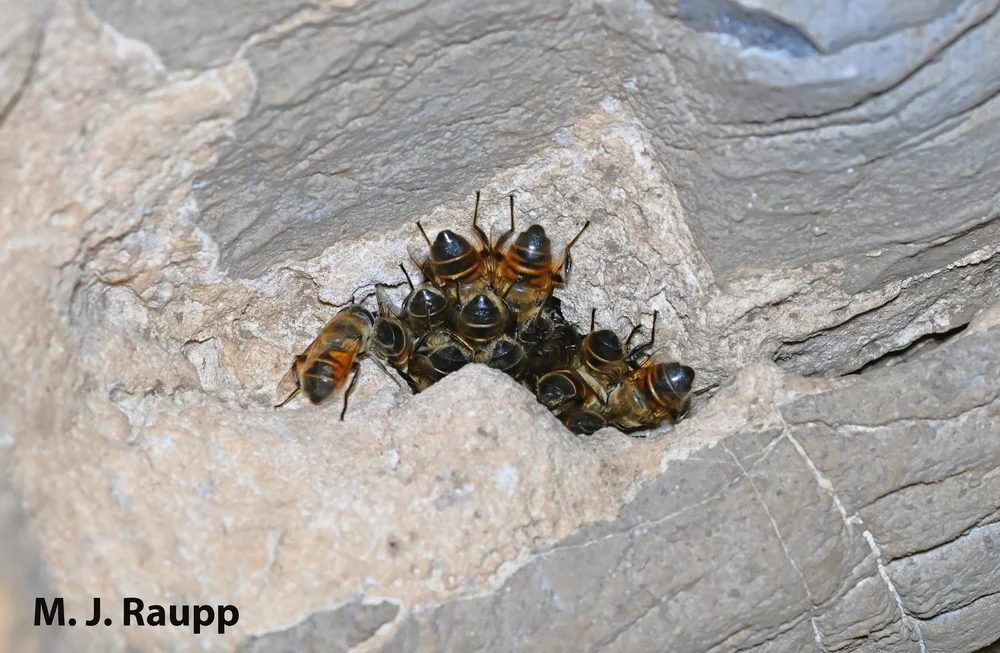
To survive the wicked winter, drone flies seek shelter and huddle in small nooks inside caves.
While spelunking in a cave last month in search of camel crickets, we happened across clusters of winged insects snuggled down for a long-winter’s nap in tiny rocky pockets on the roof of the cavern. At first glance they appeared to be bees, but on closer inspection a single pair of wings rather than two pairs proved them to be flies rather than bees. Bees have four wings and flies have two. A visit to iNaturalist confirmed these hibernal troglodytes to be drone flies. The drone fly featured this week, Eristalis tenax, is known as the common drone fly by virtue of its cosmopolitan distribution. This native of Europe is found not only in the US but in every continent except Antarctica. Unlike syrphid larvae we met in previous episodes, fierce predators providing the ecosystem service of biological control, larvae of Eristalis tenax perform a different service. They repurpose and recycle organic waste. In graduate school, my first encounter with drone fly larvae was at a large manure lagoon near the animal barns on our campus. Wriggling in these murky waters were strange larvae with exceedingly long tails on their rear end. Drone fly larvae are called rat-tailed maggots for obvious reasons. The super long appendage on their butt is a siphon used to obtain oxygen from and discharge carbon dioxide into the air above aquatic or semi-aquatic habitats such as fouled drainage ditches or manure lagoons in which rat-tailed maggots thrive.

Larval drone flies called rat-tailed maggots thrive in water fouled with manure. In these aquatic habitats they exchange oxygen and carbon dioxide with the atmosphere through an elongated siphon on their rear end. Donald Hobern. This image was originally posted to Flickr by dhobern at https://flickr.com/photos/25401497@N02/25588804434. It was reviewed on 11 April 2016 by FlickreviewR and was confirmed to be licensed under the terms of the cc-by-2.0.
Adult drone flies are important pollinators. They obtain pollen as a protein source for egg development and nectar as an energy source to fly and find suitable rank locations for egg deposition. Adults visit many types of flowering plants but show a particular affinity for many members of the aster family like daisies, zinnias, and of course, asters.
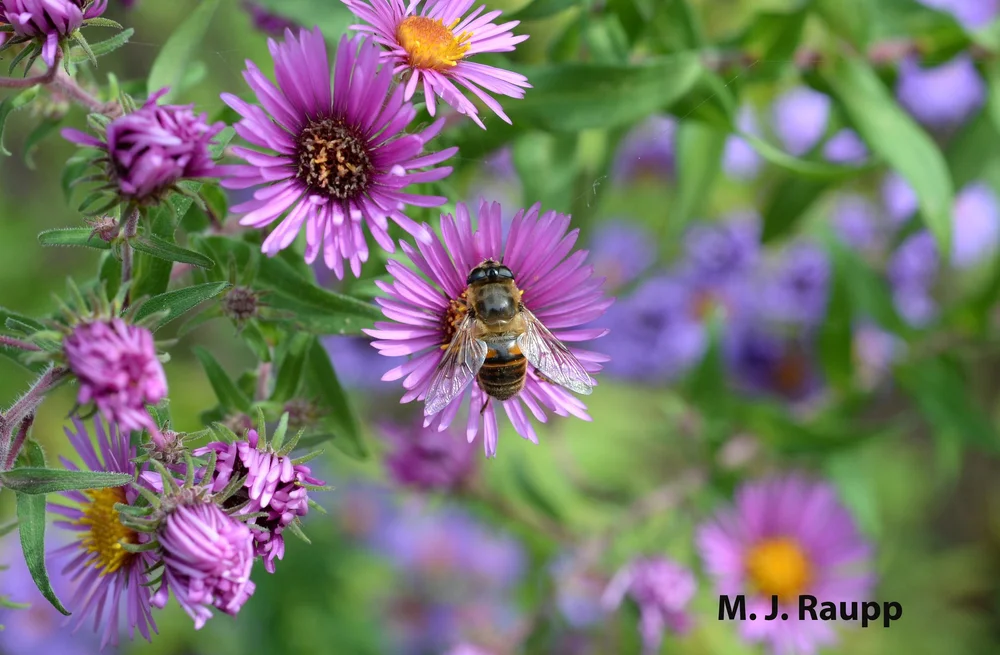
Pollination of many kinds of flowering plants is an important ecosystem service provided by several species of drone flies. Members of the aster family are some of their favorites.
While pollinating flowers and recycling animal waste are two positive attributes of drone flies, there are a few downsides to these fascinating flies. When droves of maggots leave their stinky manure lagoons to pupate, they sometimes contaminate food for livestock or wriggle into electrical boxes where they short-circuit electrical connections and cause power outages. The penchant for drone flies to lay eggs on decaying organic matter may cause improperly handled food or drink to become contaminated with eggs of tiny maggots. If ingested, they can survive in the digestive tract of animals, causing an illness called myiasis. Human myiasis associated with drone fly larvae occurs where sanitation is poor. Myiasis can cause stomach cramps, diarrhea, and an unsettling discovery of rat-tailed larvae in stool. Now that’s a nasty surprise. If you have a chance, visit a cave during this wintery season and perhaps you can spot some of these remarkable mimics as they chill-out for winter. Better yet, next spring plant some zinnias or asters and your chances of enjoying these remarkable mimics are almost guaranteed.
Acknowledgements
We thank Eliose and Abigail whose fondness for caverns provided the inspiration for this episode. Thanks also to Donald Hobern from Copenhagen, Denmark for the use of his image of a rat-tailed maggot larva: Eristalis sp., larva, Søborg, Denmark, 2 April 2016. The fact-packed article “ Drone Fly, Rat-Tailed Maggot Eristalis tenax (Linnaeus) (Insecta: Diptera: Syrphidae)” by Margaret Pfiester and Phillip E. Kaufman was a primary reference used for this article.
This post appeared first on Bug of the Week
